
Group address numbering schemes that scale with your project
By Mohamed Ali, Founder
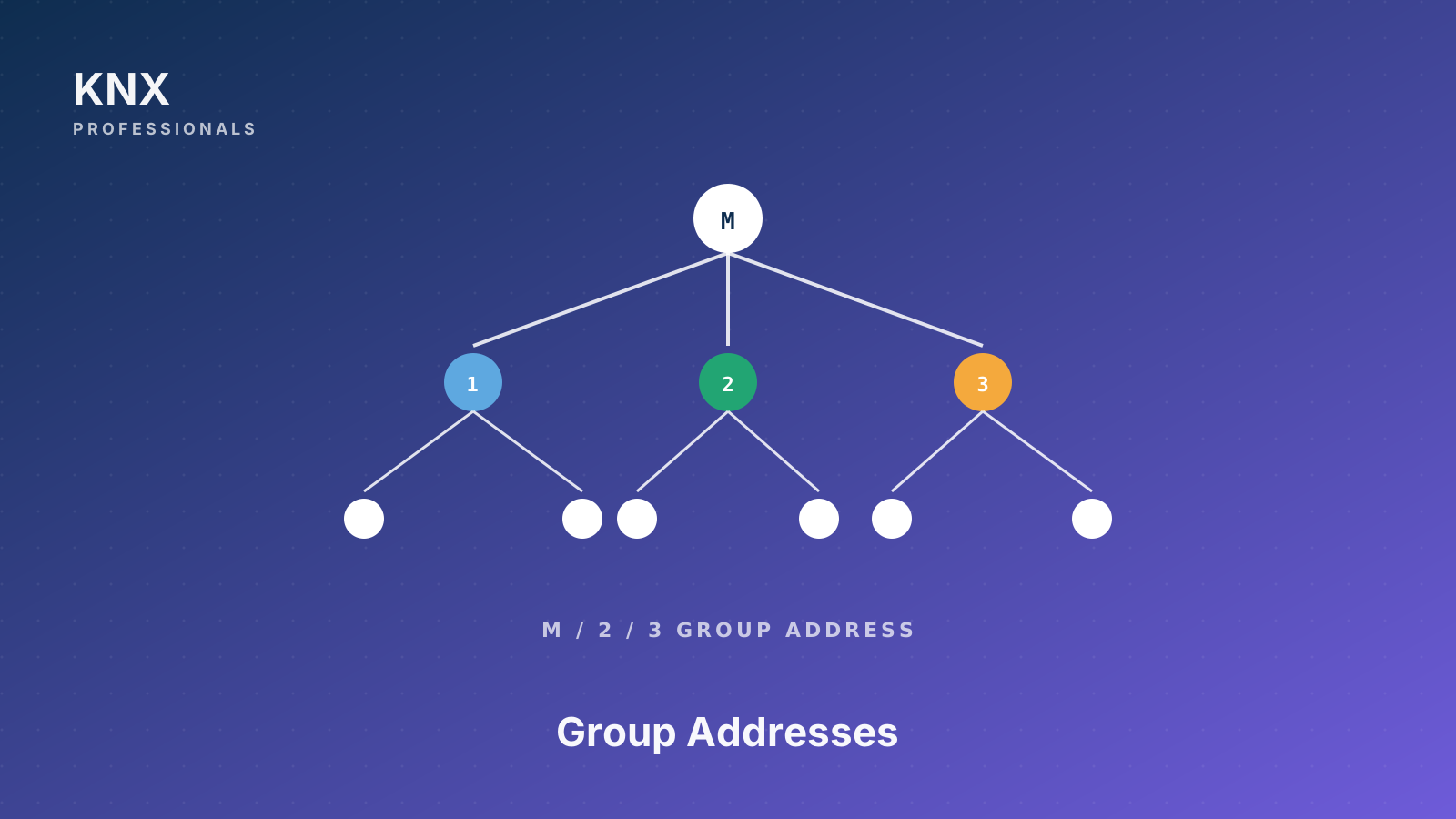
A group address is the logical channel that ties a sensor command to one or more actuators. KNX supports both two-level (Main/Sub) and three-level (Main/Middle/Sub) addressing. For anything larger than a small apartment, three-level wins because it gives you a Main number per function and a Middle number per zone or floor.
A scheme that works for residential and small commercial projects: Main 1 for lighting, 2 for blinds, 3 for HVAC, 4 for security, 5 for energy, 6 for scenes, 7 for visualization, 8 for diagnostics. Inside each Main, Middle 0 to 15 maps to floors or zones, and Sub 0 to 255 covers individual functions.
In the lighting Main, define sub-types by function. For example: Sub 1 to 99 for switch on/off, 100 to 199 for status feedback, 200 to 254 for dim values, and reserve 255 as a per-zone all-off. Doing the same convention across every floor turns commissioning into pattern-matching rather than memory work.
Reserve gaps. If a customer adds a TV cabinet next year, you do not want to slot it into a number sequence that breaks your spreadsheet. Leave at least a 30 percent buffer in every Sub range, and document the reservation policy on the first sheet of the group address export.
Finally, export the group address sheet as both .csv and .pdf at every milestone. The PDF goes in the handover pack, the .csv goes into your shared drive so the next engineer who visits the site can search for any address in seconds.