
Hotel automation: where KNX meets the property management system
By Mohamed Ali, Founder
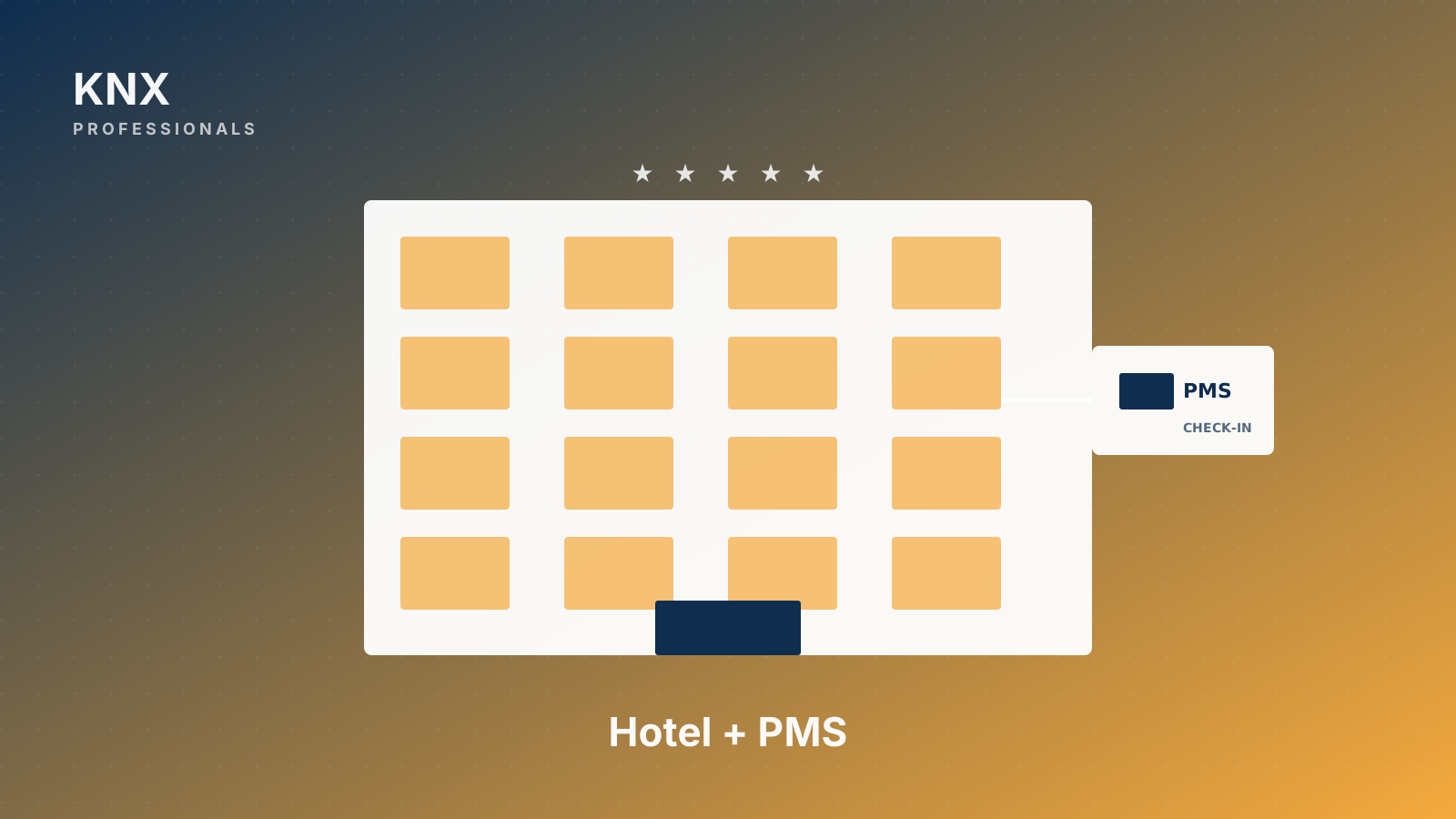
A hotel KNX project has unusual constraints. Rooms are reset to a default state every check-out. Welcome scenes trigger when a guest checks in. Privacy and Do-Not-Disturb signs flip in real time. Energy mode kicks in the second a key card is removed, and unkicks the second one is reinserted. None of this is optional; guests notice when it is wrong.
The PMS (Property Management System) is the source of truth for room state. A KNX-PMS gateway exchanges check-in, check-out, occupancy, and room-status events. Common protocols on the PMS side are OPCA, FIAS, REST, or sometimes a vendor-proprietary TCP. On the KNX side, the gateway exposes group addresses for each room state.
A standard set of per-room KNX objects: occupancy state (Occupied, Vacant, Service), key-card state (Inserted, Removed), DND state (On, Off), Make-Up-Room state (On, Off), check-in trigger, check-out trigger, energy mode (Comfort, Standby, Economy). Every actuator and sensor in the room subscribes to the relevant subset.
The scenes follow naturally. Check-in triggers a Welcome scene: lights to 30 percent, blinds to half, AC to 22 degrees, music off. Check-out triggers Reset: lights off, AC to 26 degrees, blinds open for housekeeping, master power on appliances cut.
Edge cases break projects. What happens when the PMS goes offline? KNX should fall back to the last known state and not panic. What happens when a guest leaves the key card in but is actually out? Pair the card sensor with a presence detector to confirm. What happens during a room move? Plan a Move-Room sequence that copies the guest's preferences to the new room. Solve these cases on paper before commissioning, and the hotel opens on time.